
Whether you're renovating your home, clearing a garden, or managing construction waste, choosing the right waste removal service can save you both time and money. One of the most common questions homeowners and contractors ask is whether skip hire or grab hire is the better option.
At first glance, both services achieve the same goal—they remove unwanted waste from your property. However, the way they work, the type of waste they're suited to, and the overall cost can vary significantly depending on your project.
So, which option is right for you?
In this guide, we'll compare skip hire in Poole and grab hire, explain when each service makes the most sense, and help you decide which offers the best value for your home improvement, landscaping, or construction project.
Understanding Skip Hire
Skip hire is one of the most popular waste removal solutions across Poole because it gives you the flexibility to dispose of waste at your own pace.
A skip is delivered directly to your property and left for an agreed hire period. During that time, you can fill it as your project progresses before it's collected and taken away for responsible waste processing.
Skip hire is particularly popular for home renovations, DIY projects, garden clearances, house clear-outs, and small building works because it allows you to work without feeling rushed.
If your project is likely to generate waste over several days or even a week, hiring a skip is often the most convenient solution.

What Is Grab Hire?
Grab hire works differently.
Instead of leaving a container at your property, a grab lorry arrives at an arranged time and removes waste immediately using a hydraulic arm fitted with a large grab bucket.
The vehicle loads waste directly into the lorry before transporting it away for recycling or disposal.
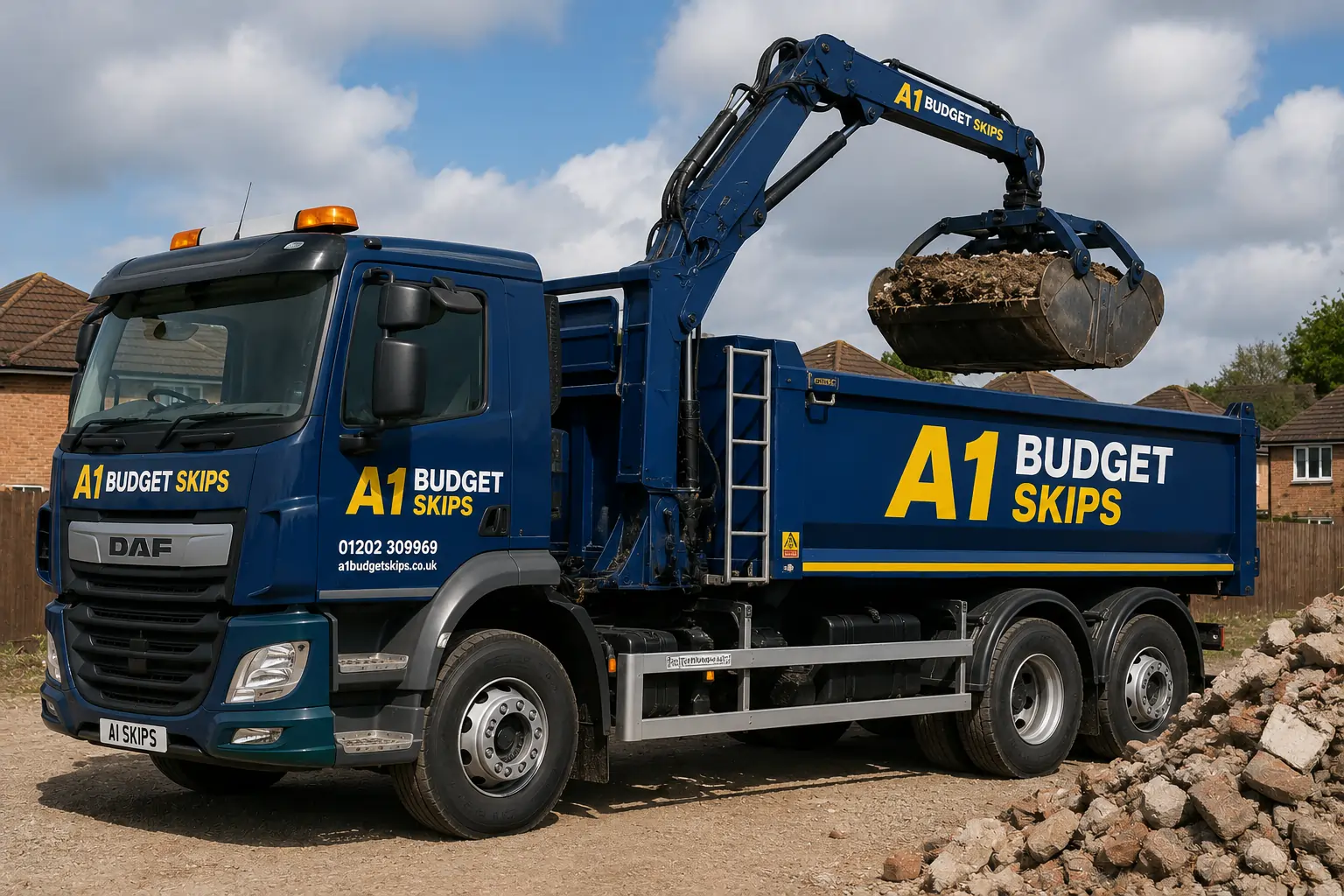
Because everything is collected during a single visit, grab hire is ideal for projects where waste has already been gathered into one area.
It's commonly used for:
- Large quantities of soil
- Hardcore
- Concrete
- Rubble
- Bricks
- Excavation waste
- Landscaping materials
Unlike skip hire, there is no need to keep a container on your driveway or arrange collection several days later.
The Biggest Difference Between Skip Hire and Grab Hire
Although both services remove waste, the biggest difference comes down to how you want to manage your project.
With skip hire, you're given the flexibility to fill the skip whenever it's convenient. Whether you're renovating one room at a time or completing a weekend garden makeover, the skip remains on-site until you're finished.
Grab hire, on the other hand, is designed for speed.
Everything needs to be ready before the vehicle arrives because the waste is loaded and removed during a single visit.
If you're still generating waste over several days, grab hire may not be the most practical choice.
When Skip Hire Is the Better Choice
For many homeowners in Poole, skip hire remains the most practical option.
Imagine you're replacing an old kitchen. Demolition begins on Monday, new units arrive on Wednesday, and the finishing work continues into the weekend.
Waste is produced throughout the project rather than all at once.
Having a skip outside means you can dispose of old cupboards, plasterboard, timber, packaging, flooring, and general building waste whenever you need to.
The same applies to loft conversions, bathroom renovations, garage clearances, and house decluttering.
Rather than creating large piles of rubbish around your property, everything goes straight into the skip as the work progresses.
Another advantage is flexibility.
If your plans change or bad weather delays your project, the skip remains available throughout your hire period.
When Grab Hire Makes More Sense
Grab hire shines when you already have a large volume of waste waiting to be collected.
For example, after excavating foundations for an extension, you may have several tonnes of soil piled on the driveway.
A standard skip may require multiple collections, whereas a grab lorry can often remove the entire pile in one visit.
It's also ideal for landscaping contractors removing large quantities of earth, hardcore, broken concrete, or construction debris.
The hydraulic arm can reach over walls and fences in many situations, making it easier to collect waste that would otherwise require manual loading.
For commercial projects with strict deadlines, this speed can significantly reduce downtime.
Which Service Costs Less?
This is one of the first questions people ask.
The truth is that neither service is always cheaper.
The better value depends entirely on the type of waste you're removing.
Skip hire is generally more cost-effective when you're disposing of mixed household or renovation waste over several days. Because you can continue filling the skip throughout the hire period, you only pay for one delivery and one collection.
Grab hire often offers better value when you're removing heavy materials such as soil, rubble, bricks, or concrete in bulk.
Instead of hiring multiple skips, one grab lorry may complete the job in a single visit.
Rather than focusing solely on price, it's worth considering how efficiently each service fits your project. Choosing the wrong option can end up costing more in additional collections or unnecessary hire time.
Which Option Is Better for Different Projects?
The answer depends on the nature of the work.
If you're renovating your home, carrying out a garage clearance, replacing a roof, or decluttering before moving house, skip hire usually provides the flexibility you need.
Garden projects can go either way.
If you're removing general green waste, old fencing, or paving over several weekends, a skip works well.
However, if you've already dug out tonnes of soil during landscaping work, grab hire is often the quicker and more practical solution.
Construction sites frequently use both services.
Builders may hire skips for day-to-day waste while arranging grab lorries to remove heavy excavation materials once groundwork has been completed.
Access Can Make a Big Difference
Before booking either service, it's worth thinking about access to your property.
A skip requires enough space for delivery and collection, usually on a driveway or another suitable area.
If the skip needs to be placed on a public road, a permit may be required.
Grab lorries also need access, but they don't remain on-site.
Instead, they require sufficient room to park while the hydraulic arm loads the waste.
If access is restricted, discussing your site with your waste removal company beforehand can help determine the best option.
Which Service Is Better for the Environment?
Whether you choose skip hire or grab hire, responsible waste management should always be a priority.
Reputable waste removal companies aim to recycle as much material as possible rather than sending everything to landfill.
Materials such as metal, timber, cardboard, bricks, concrete, and certain plastics can often be separated and processed for reuse.
Choosing a licensed waste carrier also gives you confidence that your waste will be handled responsibly and in accordance with environmental regulations.
So, Which Should You Choose?
There isn't a one-size-fits-all answer.
If your project produces waste gradually and you want the freedom to load it over several days, skip hire in Poole is usually the better option. It's ideal for home renovations, DIY projects, garage clearances, garden improvements, and household waste.
If your waste is already piled up and consists mainly of soil, hardcore, bricks, or rubble, grab hire can save time by removing everything in one visit.
The best choice depends on your project, the type of waste you're removing, and how quickly you need it cleared.
If you're still unsure, speaking with a local waste removal specialist can help you choose the most practical and cost-effective solution for your specific requirements. By selecting the right service from the outset, you'll avoid unnecessary costs, keep your project running smoothly, and ensure your waste is disposed of responsibly.
Frequently Asked Questions
It depends on your project. Skip hire is often more economical for mixed household waste generated over several days, while grab hire may be better value for large quantities of soil, concrete, or rubble that can be removed in one visit.