
Ever stared at the chaos of accumulated rubbish in your home, office, or workspace and felt that familiar pang of dread? You’ve cleared cupboards, renovated a room, or tackled a decluttering project, and yet, that final hurdle — waste removal — feels like it could undo all your hard work. The piles of old furniture, broken appliances, cardboard, plastic packaging, and even construction debris sit stubbornly, a reminder that the project isn’t truly finished.
Waste management in 2026 has evolved far beyond the days of making multiple tip runs or cramming everything into the local bin. Today, homeowners, renters, and businesses alike have smarter, more flexible options. Whether it’s clearing a single room, redecorating an entire property, or handling construction and renovation debris, the three main solutions stand out: skip hire, skip bags, and man & van waste removal services. Each comes with distinct advantages, limitations, and practical considerations — and understanding the differences can save you time, money, and stress.
This isn’t a simple comparison chart. This is a comprehensive guide for anyone who wants to take control of waste responsibly, efficiently, and without headaches. By the end, you’ll know which solution fits your project, how to optimize costs, and how to make sure your waste is handled safely and sustainably.
Why Waste Management Feels Complicated
Waste isn’t a single problem; it’s a spectrum. Your waste could include soft items like packaging, old clothes, and cardboard, heavy items like soil, rubble, or furniture, or even hazardous materials that require careful handling. Combining multiple types of waste in a single project can be daunting.
The difficulty lies not just in volume, but in accessibility and logistics. For example, a traditional council collection may be perfect for small domestic amounts but completely impractical for construction rubble, garden excavation soil, or bulky furniture. Without a clear plan, your project can stall, or worse, waste can accumulate and create health, safety, and environmental risks.
This is why understanding the tools at your disposal is critical. Skip hire, skip bags, and man & van services aren’t interchangeable; each is a solution designed for specific needs, with unique advantages and potential drawbacks.
Skip Hire: The Classic Solution
Skip hire remains the go-to solution for large-scale waste projects, whether residential, commercial, or construction-related. Imagine having a large, sturdy container placed right outside your property, ready to accept waste at your own pace. That’s the core appeal: control and convenience.
Skip hire gives you flexibility. You can fill it over several days, weeks, or even a short-term period tailored to your project. Unlike a scheduled pickup or pre-packed bags, a skip allows you to work at your own pace, whether it’s clearing out an office, renovating a home, or undertaking a major landscaping project.
One of the major benefits of skip hire is volume capacity. Skips range from small 2-3 yard containers, perfect for minor domestic clear-outs, to 10-12 yard options suitable for extensive construction or office refurbishments. This range ensures you’re paying for precisely the space you need — not a penny more.
Skip hire is particularly advantageous for heavy or bulky materials. Soil, rubble, furniture, and appliances are easily accommodated, and the container’s construction means weight limits are generous compared to alternative options. This makes skip hire ideal for projects that combine multiple waste types.
Another key consideration is permitting and placement. Skips are typically placed on private driveways, but if they need to be on public roads, most providers assist with the necessary permits, ensuring compliance with local regulations.

This is a convenience that eliminates the stress of navigating local authority bureaucracy.
Skip hire’s main limitations are access and cost. Driveways, narrow streets, or properties with limited access may require smaller containers or alternative solutions. Additionally, for very small waste projects, a skip may feel like overkill both in size and cost.
Skip Bags: The Flexible Alternative
Skip bags emerged as a solution for those who needed the capacity and convenience of a skip without the physical footprint. Unlike a rigid container, skip bags are heavy-duty, flexible, and can fit into smaller spaces. They’re delivered to your property, filled over a chosen timeframe, and collected once full.
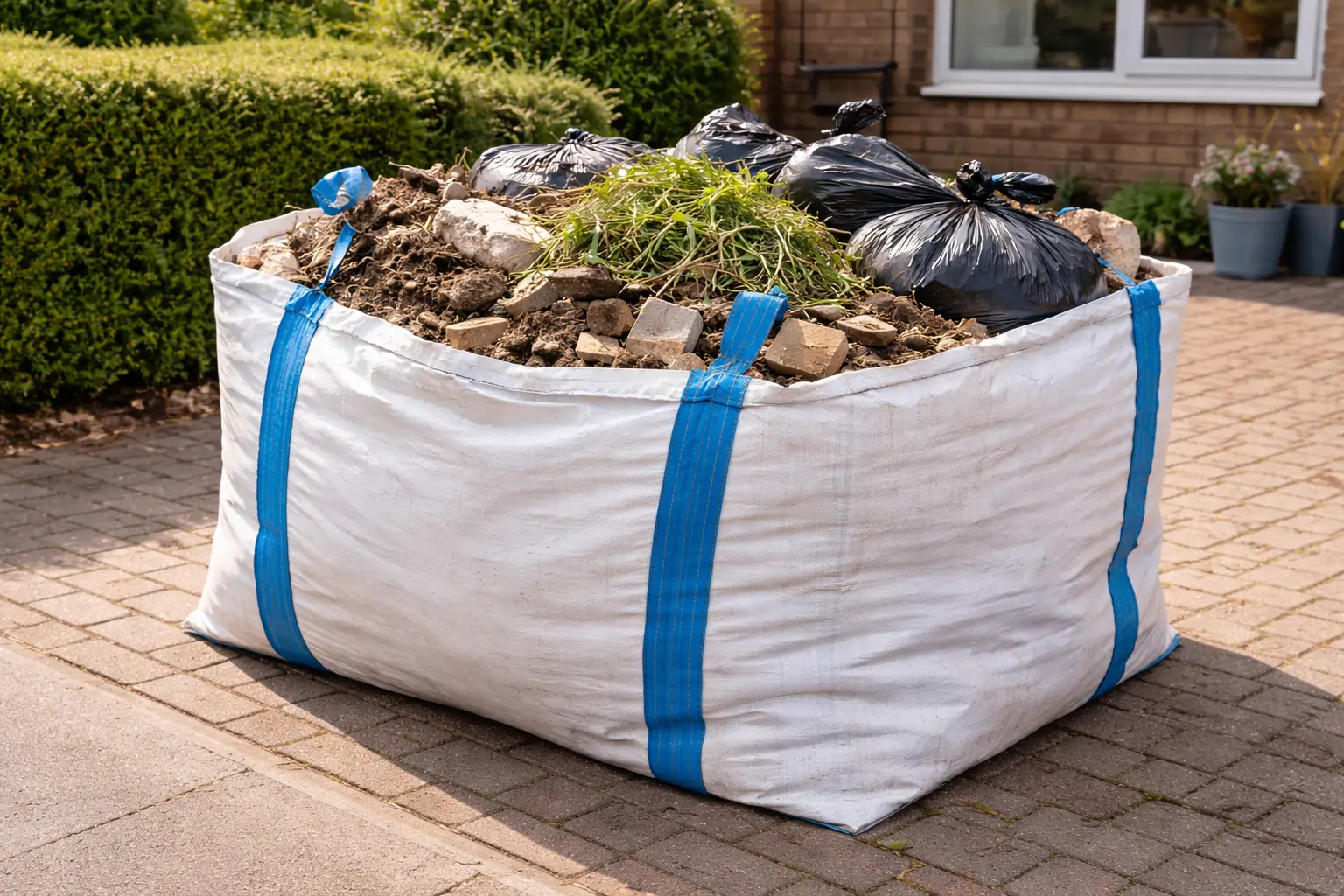
The beauty of skip bags lies in their adaptability. They work well in tight spaces, narrow drives, or urban properties where a skip truck cannot maneuver. They’re also cost-effective for lighter waste projects that don’t require a full-sized skip. Soft domestic waste, packaging, old clothes, garden trimmings, and light demolition debris are all ideal candidates.
Skip bags are also ideal for incremental projects. If you’re slowly clearing a property over several weeks, you can have bags delivered and collected in a staggered schedule, matching the pace of your work.
However, skip bags have their limitations. They are generally unsuitable for very heavy items like soil, concrete, bricks, or large furniture.
Overfilling or exceeding weight limits can lead to additional charges or even collection refusal. Therefore, while skip bags are incredibly convenient for lighter or moderate waste, they cannot entirely replace skip hire for large-scale projects.
Man & Van Waste Removal: The Zero-Lift Solution
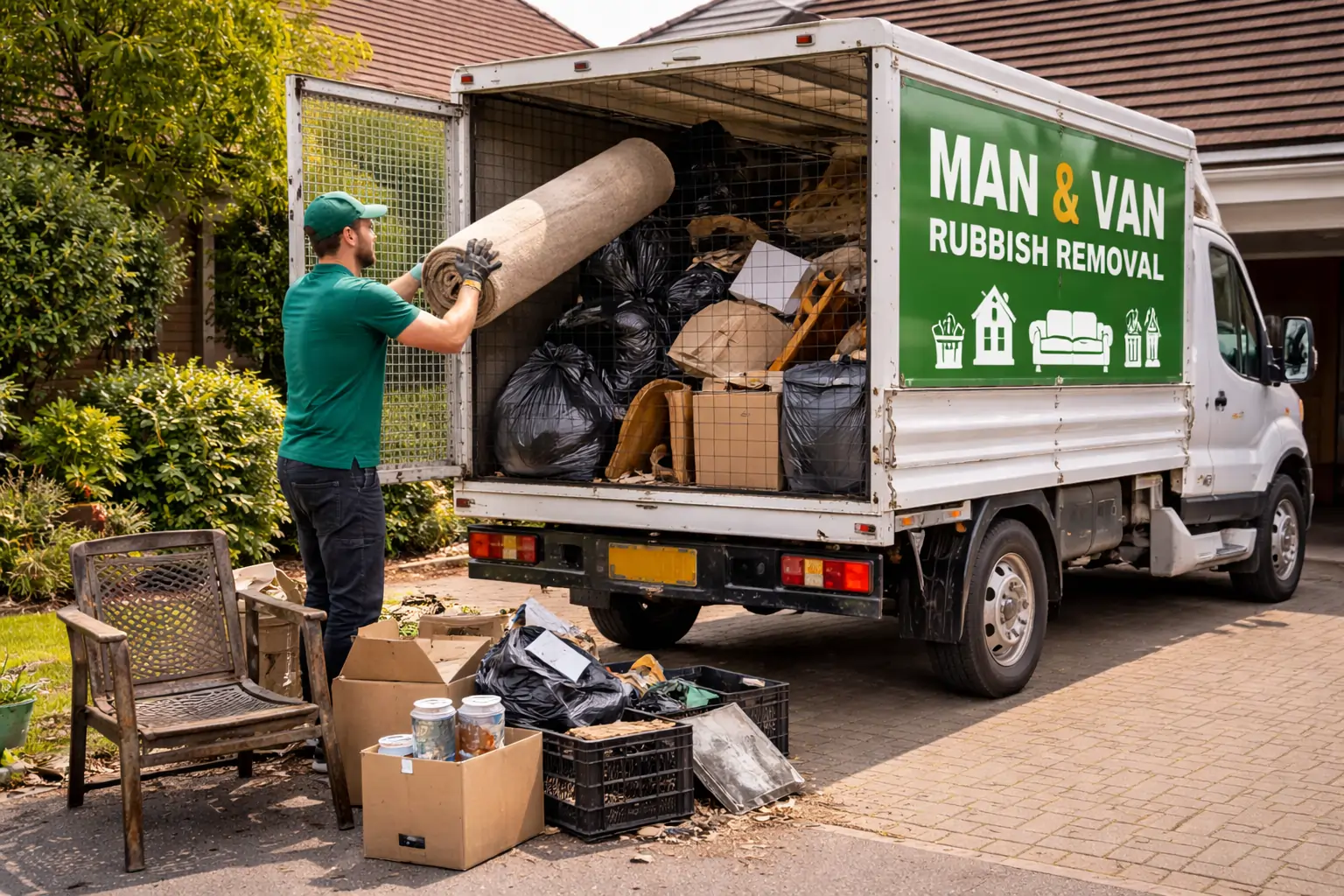
For those who dread the physical labour of waste removal, man & van services provide an unmatched level of convenience. A professional team arrives, handles all the heavy lifting, and ensures the waste is taken away safely.
This option is especially appealing for busy homeowners, office managers, or anyone with mobility or time constraints. Unlike skips or skip bags, you do not need to lift a single item — the service handles everything from loading to disposal.
Man & van services shine in mixed waste scenarios. Whether it’s old office furniture, garden debris, appliances, or construction remnants, a professional team can accommodate varied material types. They also often offer on-demand collection, making them ideal for urgent or last-minute clearances.
The main trade-off with man & van services is cost. Because labour is included, these services are typically more expensive than self-loaded skip hire or skip bags. However, for many, the time saved and stress avoided justifies the price.
Comparing the Options in Practice
When considering skip hire, skip bags, or man & van services, it helps to examine real-world scenarios.
Imagine a homeowner renovating their kitchen. Old appliances, timber, and packaging accumulate. A skip hire solution allows them to clear everything over a weekend, consolidating the waste in one container. It’s cost-effective and efficient for larger quantities.
A renter decluttering a bedroom might choose skip bags, filling them gradually with old clothes, books, and small furniture. The bags are small, lightweight, and collected without the need for a large skip.
Meanwhile, a business clearing out its office before relocation might opt for a man & van service, letting professionals handle heavy desks, chairs, and electronics. The convenience outweighs cost concerns, especially when employees need to focus on operations rather than hauling waste.
Each solution has its sweet spot. Skip hire is volume and weight-friendly, skip bags are space- and budget-conscious, and man & van services are convenience-oriented. Understanding your project’s size, material type, and timeline is key to choosing the right method.
Planning for Smarter Waste Management
Efficient waste management in 2026 isn’t just about choosing a service — it’s about planning. Estimate your waste volume, separate materials by type, and consider access and placement. If you’re working with hazardous items, check for legal disposal requirements.
Hybrid strategies are increasingly popular. Some projects combine a skip for heavy debris, skip bags for lighter materials, and a man & van collection for urgent, bulky items. This approach maximizes efficiency, reduces cost, and ensures compliance with local waste management regulations.
Sustainability and Responsible Disposal
In addition to efficiency and convenience, responsible disposal is essential. Licensed providers like A1 Budget Skips ensure that waste is processed ethically. Green waste is composted, timber is recycled, and construction materials are diverted from landfill whenever possible.
Modern waste management isn’t just about getting rid of trash — it’s about turning waste into resources, supporting local recycling initiatives, and reducing environmental impact. Choosing a provider with transparent disposal practices ensures that your project benefits both your space and the community.
Choose the Right Tool for the Job
Waste removal in 2026 has never been more flexible. Whether you choose skip hire, skip bags, or man & van services depends on your project’s size, type, and timeline. Skip hire is unbeatable for large, heavy projects; skip bags shine in small, incremental jobs; and man & van services deliver ultimate convenience.
Smart gardeners, homeowners, and businesses recognize that matching the solution to the task is the key to efficient, stress-free waste management. By choosing the right method and working with a responsible provider, you can complete your project without wasted time, energy, or resources.
The final pile of waste doesn’t have to be a symbol of frustration. With the right plan, it becomes just another step in completing your project.
Frequently Asked Questions About Skip Hire and Waste Removal
It depends on volume, weight, and convenience. Large projects with heavy items like rubble or appliances are best suited to skip hire. Smaller projects or tight spaces work well with skip bags. Man & van services are ideal if you want someone else to handle the lifting and transport. For tips, check out our skip size & service comparison.